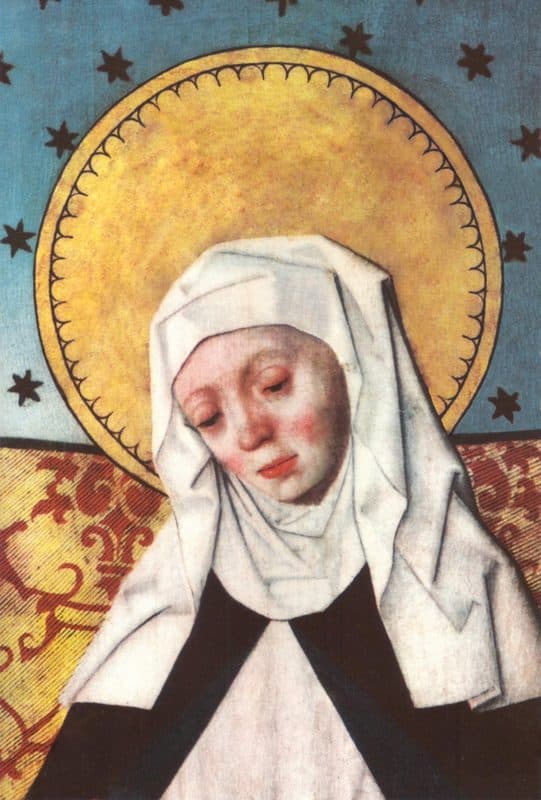
St. Bridget of Sweden
Patroness of Europe
Feast: July 23 · Memorial
c. 1303, Finsta, Sweden
23 July 1373, Rome
7 Oct 1391, by Pope Boniface IX
Wife, mother, mystic; founder of the Bridgettines
Sweden / Rome · 14th century
Patron of
Spirituality
St. Bridget was born around the year 1303 into a wealthy, noble family in Sweden. Her parents loved Jesus very much — it was a love she learned from her very birth. At the age of ten she began receiving visions of Jesus crucified on the Cross.
Just three years later, she was married to Ulf Gudmarsson, an influential lawspeaker in Sweden (a leading office of law and governance). Eight children and twenty-eight years of marriage fostered a deep, mutual love between them — one of her biographers noted that she loved Ulf as she loved her own life. Because of their deep care for each other, she was given authority over her household. She also served the royal court and cared for the poor in her city. Her witness to Jesus was so great that even her daughter Catherine became a saint!
She and Ulf sought holiness together, desiring as a couple to live a life in their own home much like that of a religious community. As they grew older, some sources say Ulf was drawn to the monastic life (living in a community whose whole life is found in Christ). Together they made a pilgrimage — a journey to a holy place, undertaken to experience the life of the Church in a special way. On their return home, Ulf fell ill. St. Bridget prayed fervently, and she was blessed with a vision of St. Denis, who told her that Ulf would come through this illness, but that from then on they should live the rest of their lives as "brother and sister" — which means, in the Church, that they would give up marital relations.
A year later, when Ulf became terminally ill again, St. Bridget took him to a Cistercian monastery, where he passed away. Jesus always feels closest to us when we are carrying the crosses of our human life. When Ulf died, it broke Bridget's strong heart, but she was no stranger to Jesus on the Cross. In fact, I'm sure her closeness to Jesus on the Cross is precisely how she got through the deep ache of grief.
After Ulf's death, she became a Third Order Franciscan and felt convicted to found the Order of the Most Holy Savior, now more often called the Bridgettines. In 1350, amid the plague, she and her daughter Catherine journeyed to Rome to seek the Pope's approval for her new religious order. At that time the Pope was living in Avignon, France — a subject of great debate in the Church in those days. During her time in Rome, her care for the sick, her love for the poor, and her zeal for reform in the Church made her well-loved in this new city. Pope Urban V returned from Avignon and, in 1370, gave his approval for her order. After his yes, she sent exact specifications for how her monasteries should be built and run. Apart from some pilgrimages over those years, she went home to eternal life with Jesus on July 23, 1373. After her death, her remains were carried back to the monastery in Vadstena, Sweden, where they reside to this day.
In her own words
“To write well and speak well is mere vanity if one does not live well.”
“The source of justice is not vengeance but charity.”
In sacred art
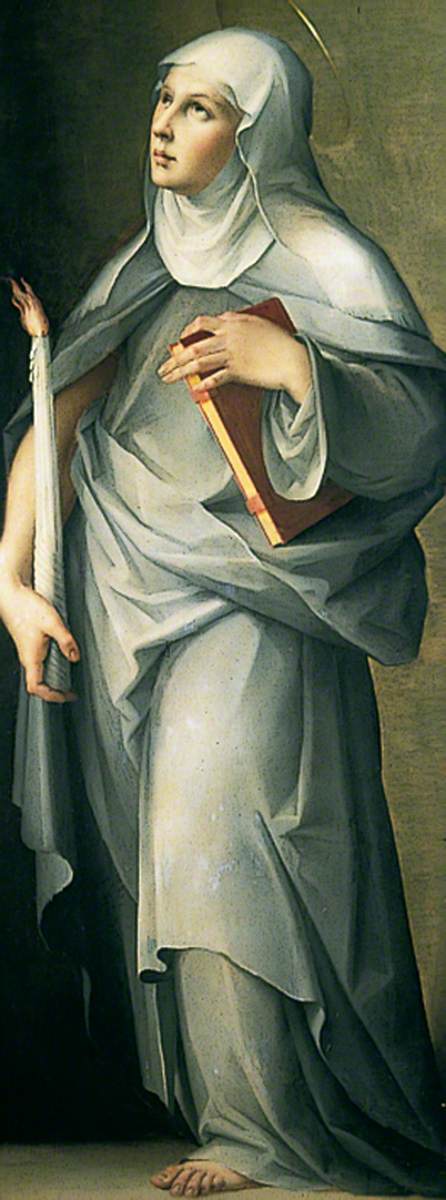
Guido Reni · Saint Bridget of Sweden, 17th century
Image: Altarpiece, public domain (Wikimedia Commons) · source